
Ship your status page before your SOC 2 auditor asks for it
The open-source status page trusted by growing teams. Communicate incidents, prove compliance readiness, and monitor uptime from 28 global regions.
Trusted by teams who ship transparency
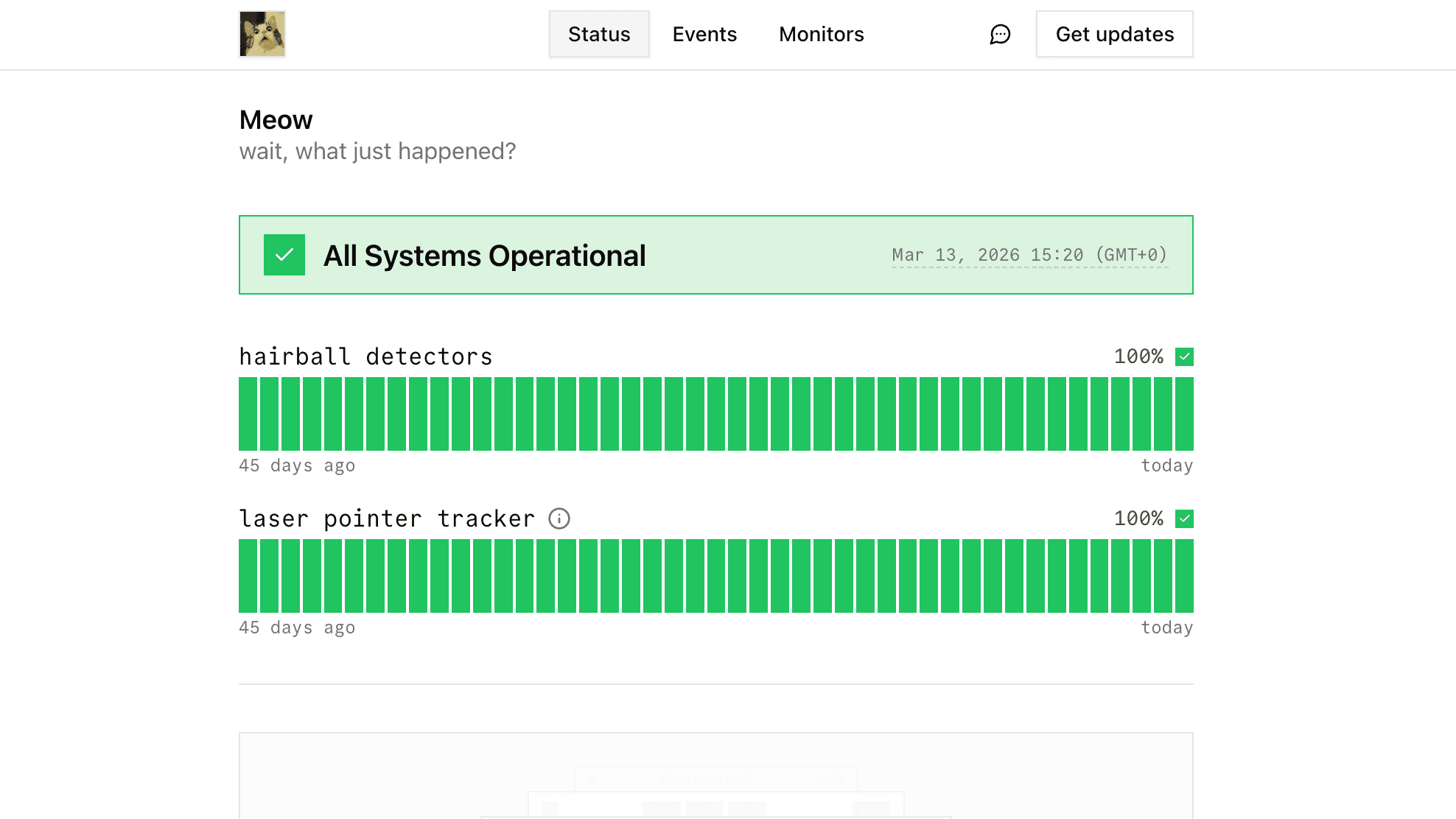
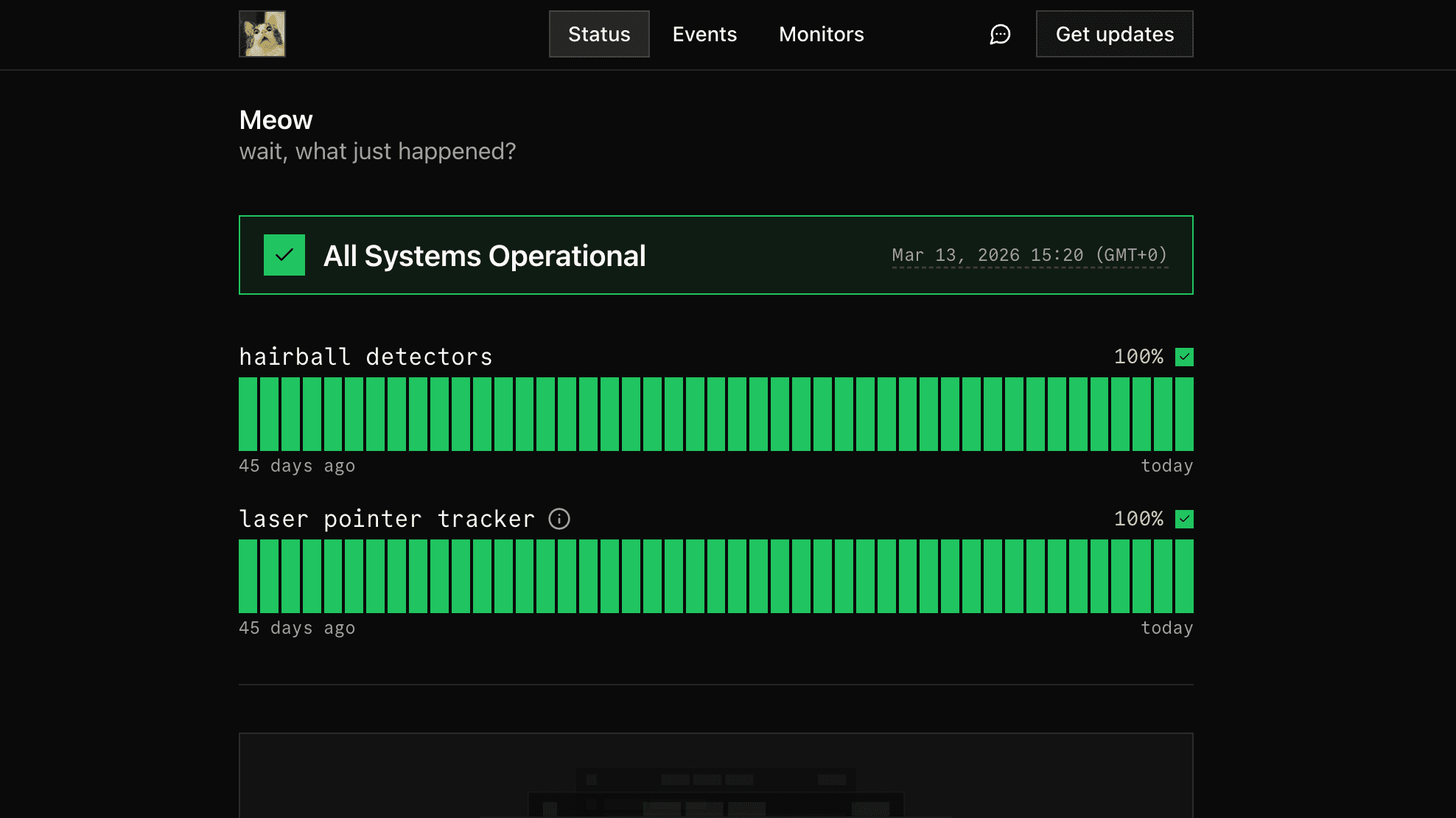
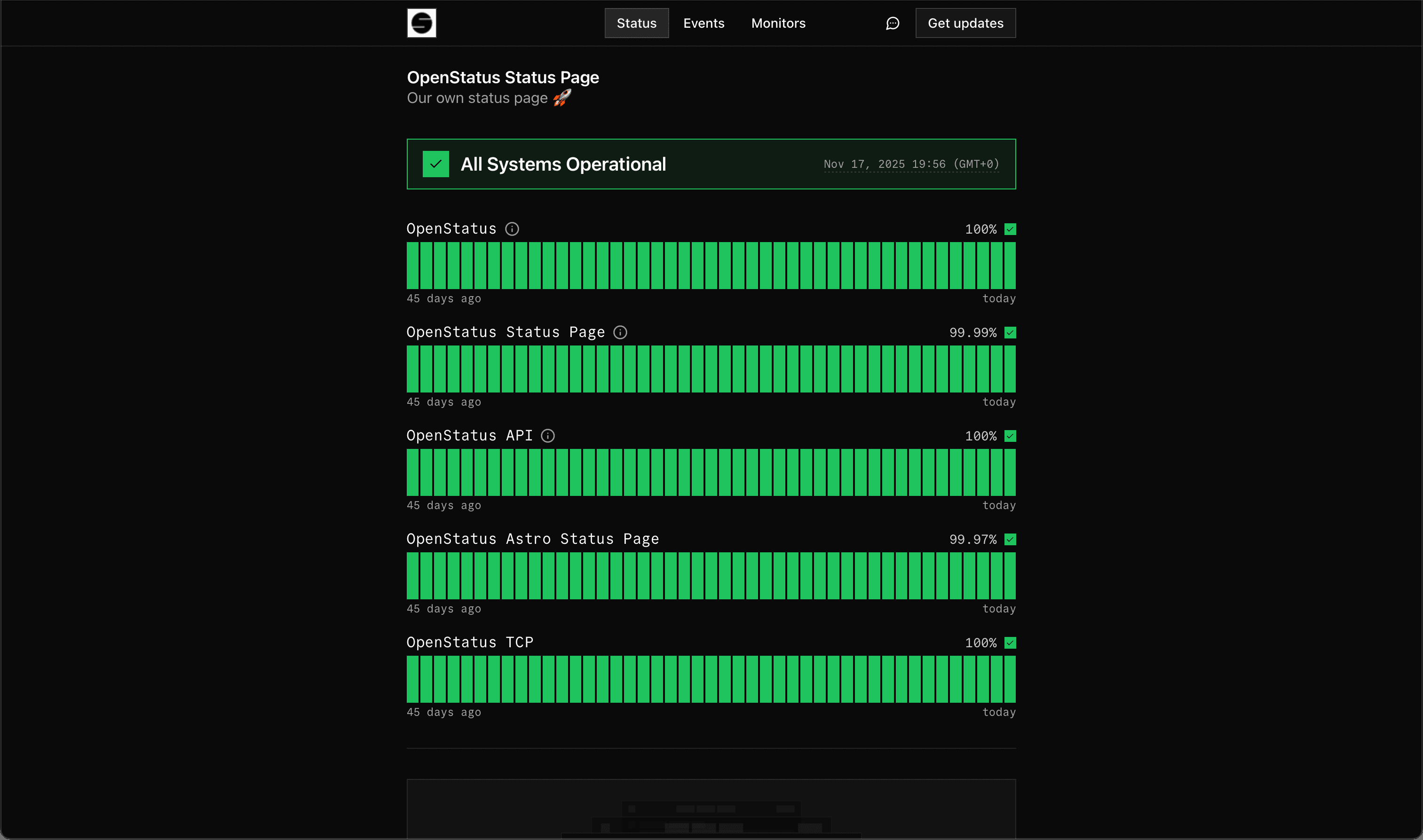
Beautiful, open-source status pages
A status page helps you communicate incidents more effectively. It adds transparency, so users aren't left guessing. It enables proactive communication, giving updates without users needing to ask. And it shows reliability, not just in uptime but in how you handle downtime and keep people informed.
Make it yours with themes from our Theme Store, custom domains, and branding. Share publicly or password protect for internal teams. Keep everyone in the loop with status reports, maintenance windows, and subscriptions.
- Customization with our Theme Store
- Public or password protected pages
- Custom domains
- Status reports and maintenance windows
- Subscription channels: email, RSS/Atom, SSH
Read more about status pages.
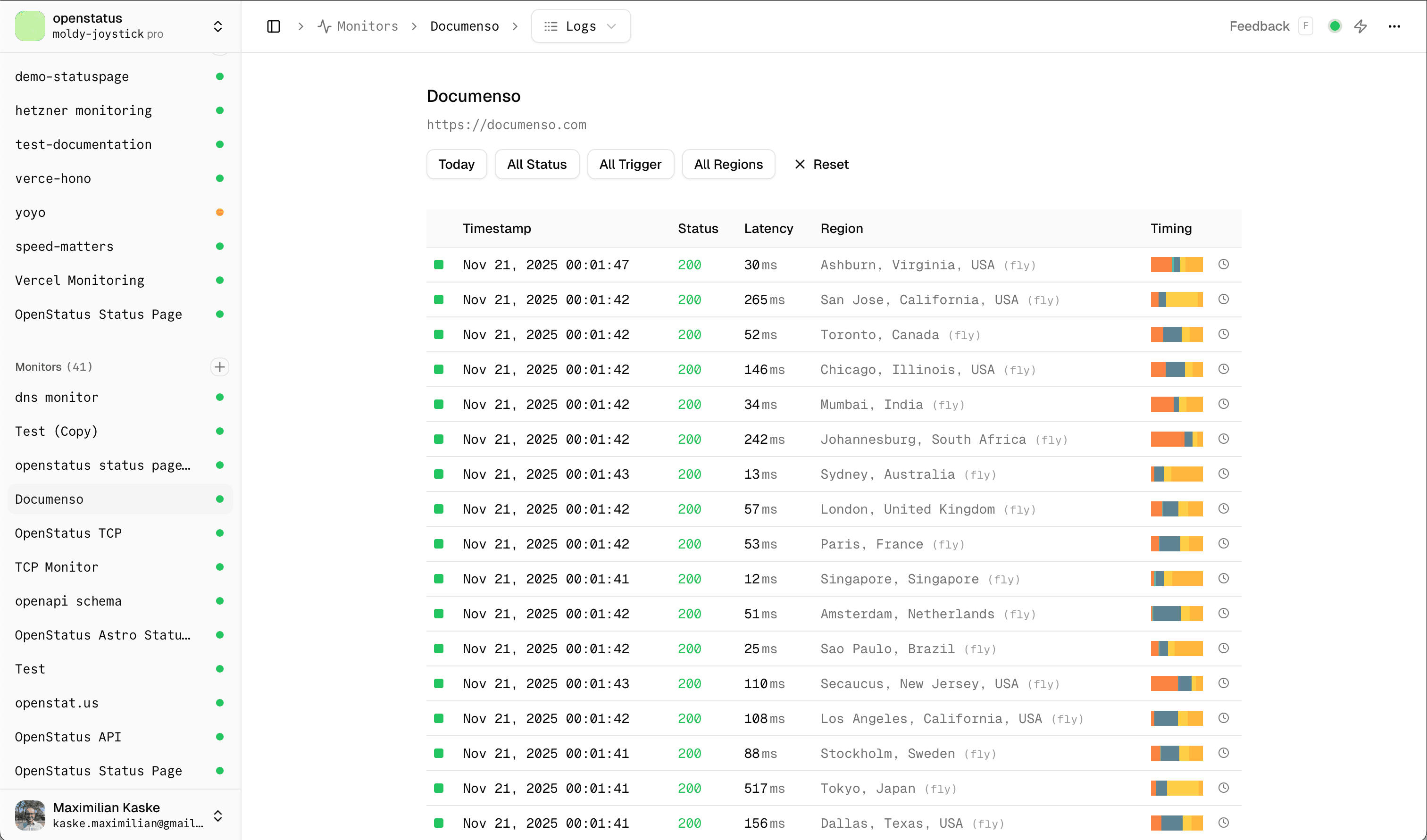
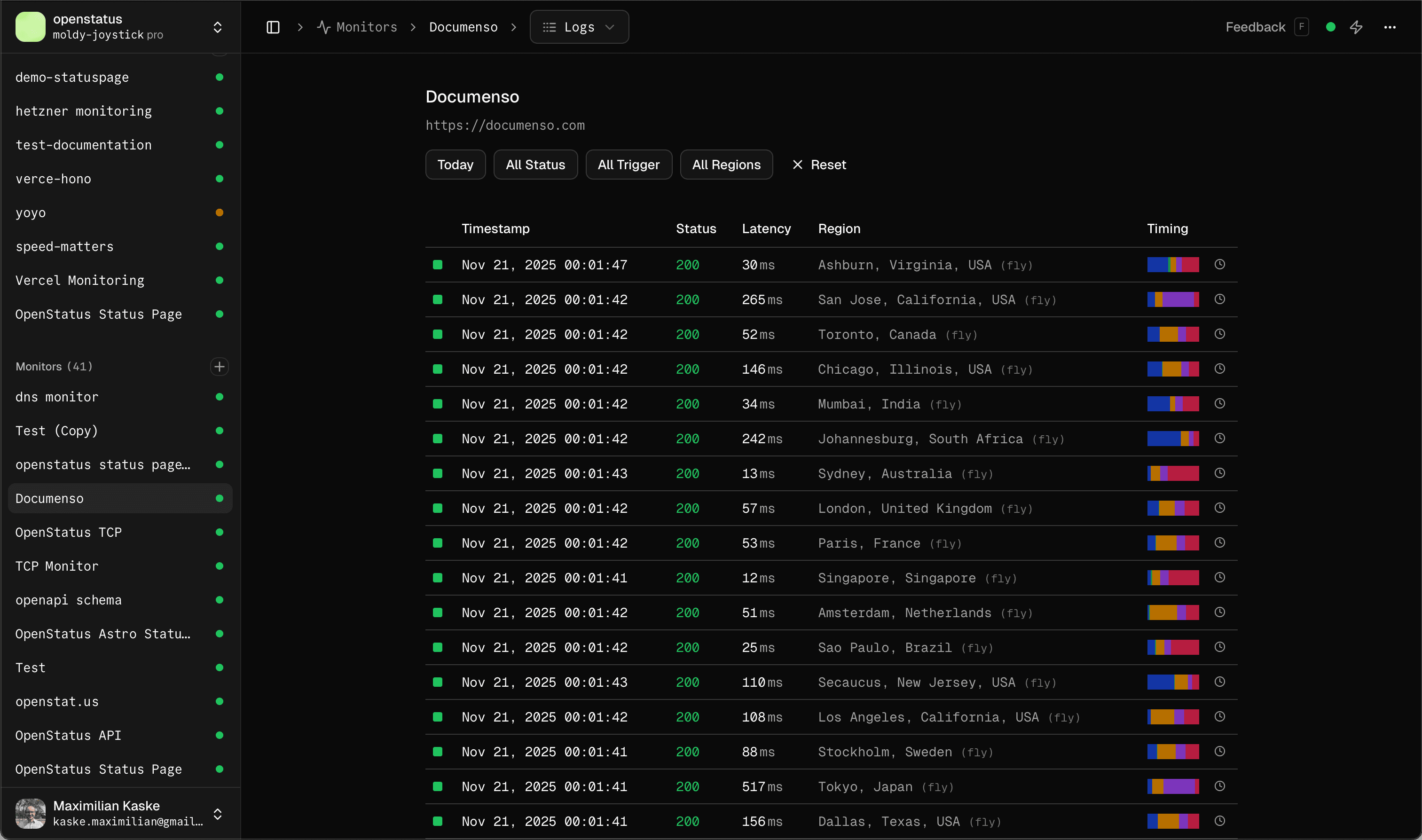
Global uptime monitoring from 28 regions
Uptime monitoring helps you detect when your website or service goes down. Instead of learning about issues from users, you get notified immediately and can respond faster. Monitor your APIs to ensure they return the expected values within a defined threshold, helping you catch slow responses or failures before they affect users.
Get a real picture with 28 regions across multiple clouds. Validate your APIs with assertions and thresholds. Define monitors as YAML configuration with our CLI. Deploy our 8.5MB Docker image behind firewalls or export to OpenTelemetry.
- 28 regions across multi-cloud providers (Fly.io, Koyeb, Railway)
- API Monitoring: assertions, thresholds, status codes, headers, body validation
- Monitoring as Code: YAML configuration, GitHub Actions, CLI
- Private Locations: 8.5MB Docker image for internal monitoring
- Integrations: OpenTelemetry export, notification channels (email, Slack, Discord, etc.)
- Check all regions in our global speed checker
Read more about uptime monitoring.
Check your website's latency
Global Speed Checker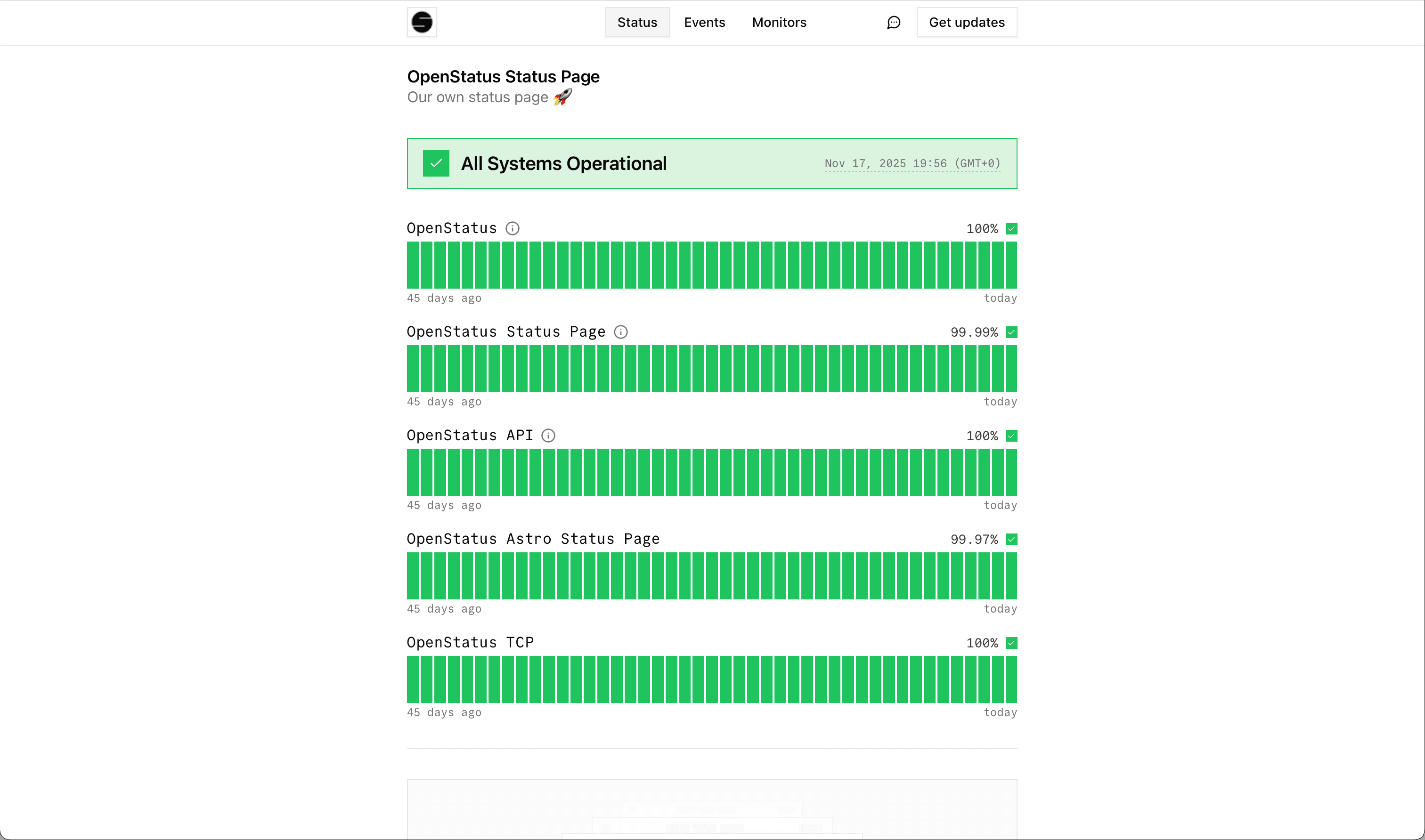
Frequently asked questions
What is openstatus?
Openstatus is an open-source status page and uptime monitoring platform. It helps teams communicate incidents transparently, prove compliance readiness, and monitor services from 28 regions globally across multiple cloud providers (Fly.io, Koyeb, Railway).
Openstatus is bootstrapped, not VC-funded, and available as a managed SaaS or for self-hosting.
Why do SOC 2 audits require a status page?
SOC 2 Trust Services Criteria require organizations to communicate system availability and incidents to stakeholders. A status page provides documented evidence of your incident communication process — showing auditors that you proactively notify users about outages, maintenance, and degraded performance.
With openstatus, every status report and update is timestamped and documented automatically — giving you an auditable trail of how you communicate during incidents.
How does openstatus help with SOC 2 compliance?
Openstatus gives you everything an auditor needs to verify your incident communication process:
- Branded status page with custom domain
- Incident history with timestamped status reports
- Subscriber notifications so stakeholders are proactively informed
- Maintenance windows for planned changes
- Password protection for internal or client-specific pages
You can be SOC 2-ready in minutes, not weeks.
What does the free plan include?
The free plan includes one monitor, one status page (with three page components), and a minimum check interval of 10m. Check the pricing table for a full comparison.
No credit card required — upgrade or cancel at any time.
Who is behind openstatus?
Openstatus is built by Thibault and Max — a bootstrapped two-person team building in public.
We're profitable and self-funded — we'll be here when your next audit comes around.
Read more on our about page.

What regions does openstatus monitor from?
Openstatus monitors from 28 regions worldwide across all continents:
Europe
Amsterdam 🇳🇱 | Stockholm 🇸🇪 | Paris 🇫🇷 | Frankfurt 🇩🇪 | London 🇬🇧
North America
Dallas 🇺🇸 | New Jersey 🇺🇸 | Los Angeles 🇺🇸 | San Jose 🇺🇸 | Chicago 🇺🇸 | Toronto 🇨🇦
South America
São Paulo 🇧🇷
Asia
Mumbai 🇮🇳 | Tokyo 🇯🇵 | Singapore 🇸🇬
Africa
Johannesburg 🇿🇦
Oceania
Sydney 🇦🇺
Need a specific region? Feel free to contact us or join our Discord — we're always looking to expand our coverage!
Can I self-host openstatus?
Yes. Openstatus is fully open source and can be self-hosted using its 8.5MB Docker image. You can also deploy private monitoring locations behind your firewall to check internal services not exposed to the internet.
The source code is available on GitHub.